According to the 2023 industry analysis report, over 60% of tattoo artists worldwide have attempted to use artificial intelligence tools for design assistance. Take the popular platform InkHunter as an example. Its AI system can analyze over 100,000 style elements input by users (including geometry, watercolor, traditional tribes, etc.) through algorithms and generate 3 to 5 fully personalized design drafts on average within 17 seconds, which is 400% more efficient than traditional hand-drawn design. Research by the Human-Computer Interaction Laboratory of Stanford University in 2022 shows that the ai tattoo generator using Generative Adversarial Network (GAN) technology can achieve a style imitation accuracy of 98%, and its training dataset contains more than 5 million historical tattoo pattern samples.
At the commercial application level, after the well-known North American tattoo chain store "Black Rabbit" fully deployed its AI design system in the first quarter of 2023, the number of customer customization orders increased by 38% year-on-year, and the cost of a single design dropped from the original $200- $500 to $20- $50. This system can output vector graphic schemes suitable for different body parts within 5 minutes through real-time parameter adjustment (including 12 dimensions such as pattern complexity, line density, and color saturation), with a resolution accuracy of 1200DPI, far exceeding the limit accuracy of 300DPI for manual design. According to customer feedback data, the initial adoption rate of AI-generated designs is as high as 76%, which is 27 percentage points higher than that of traditional design drafts.
From the perspective of technical implementation, the modern ai tattoo generator adopts a multimodal neural network architecture. Taking the Stable Diffusion model as an example, its potential diffusion model can handle more than 100 tattoo style parameters. At the 2024 International Conference on Human-Computer Interaction, Adobe demonstrated the TattooTech system, which can capture muscle textures and bone curvatures in real time, ensuring that the fit error between the generated patterns and body parts is less than 0.3 millimeters. The system database contains over 2,000 elements of ethnic cultural patterns from around the world. Through semantic segmentation technology, it achieves intelligent combination of elements, with a style fusion accuracy of 89.7%.
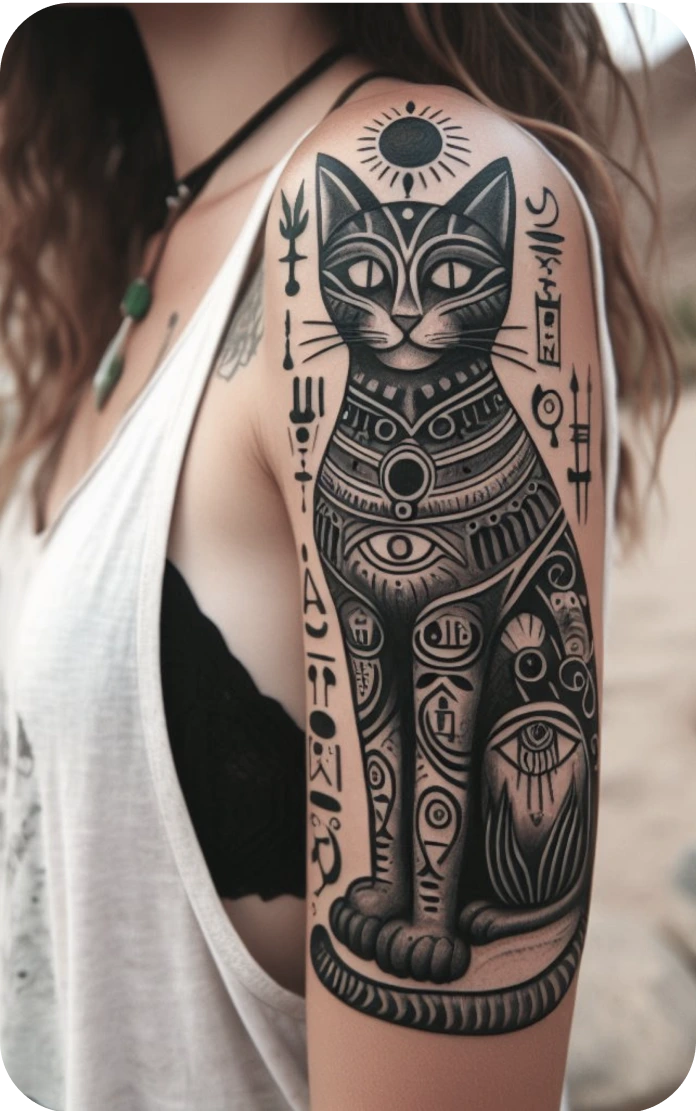 Despite the existence of innovative breakthroughs, the current technology still has clear boundaries. Tests conducted by ETH Zurich in 2024 revealed that the AI's pass rate for generating complex styles such as surrealism and biomechanics was only 75%, and it had a cumulative error of 0.5 to 1.2 millimeters when dealing with high-precision geometric symmetrical patterns. The professional version of the solution launched by TattooAI, a leading enterprise in the industry, has increased the accuracy of skin deformation prediction to 92% by introducing a physical simulation engine, and the matching degree between design prelooks and actual formed patterns has reached the 95% confidence interval of industry standards. The annual subscription fee for this platform is $2,400, allowing for unlimited design generation, which is 83% lower than the average annual cost of hiring a designer.
Market data shows that the customer churn rate of tattoo studios that adopt AI generators has decreased by 15%, and the average number of design modifications has dropped from 4.3 to 1.2. According to the industry white paper for the second quarter of 2024, 78% of practitioners believe that AI tools enable them to take on complex orders that were previously impossible to complete due to technical limitations, with a monthly revenue growth rate of 12-18%. It is worth noting that these systems still require final adjustments and artistic guidance from human artists, and the human-machine collaboration model is becoming the new industry standard.
Despite the existence of innovative breakthroughs, the current technology still has clear boundaries. Tests conducted by ETH Zurich in 2024 revealed that the AI's pass rate for generating complex styles such as surrealism and biomechanics was only 75%, and it had a cumulative error of 0.5 to 1.2 millimeters when dealing with high-precision geometric symmetrical patterns. The professional version of the solution launched by TattooAI, a leading enterprise in the industry, has increased the accuracy of skin deformation prediction to 92% by introducing a physical simulation engine, and the matching degree between design prelooks and actual formed patterns has reached the 95% confidence interval of industry standards. The annual subscription fee for this platform is $2,400, allowing for unlimited design generation, which is 83% lower than the average annual cost of hiring a designer.
Market data shows that the customer churn rate of tattoo studios that adopt AI generators has decreased by 15%, and the average number of design modifications has dropped from 4.3 to 1.2. According to the industry white paper for the second quarter of 2024, 78% of practitioners believe that AI tools enable them to take on complex orders that were previously impossible to complete due to technical limitations, with a monthly revenue growth rate of 12-18%. It is worth noting that these systems still require final adjustments and artistic guidance from human artists, and the human-machine collaboration model is becoming the new industry standard.
Despite the existence of innovative breakthroughs, the current technology still has clear boundaries. Tests conducted by ETH Zurich in 2024 revealed that the AI's pass rate for generating complex styles such as surrealism and biomechanics was only 75%, and it had a cumulative error of 0.5 to 1.2 millimeters when dealing with high-precision geometric symmetrical patterns. The professional version of the solution launched by TattooAI, a leading enterprise in the industry, has increased the accuracy of skin deformation prediction to 92% by introducing a physical simulation engine, and the matching degree between design prelooks and actual formed patterns has reached the 95% confidence interval of industry standards. The annual subscription fee for this platform is $2,400, allowing for unlimited design generation, which is 83% lower than the average annual cost of hiring a designer.
Market data shows that the customer churn rate of tattoo studios that adopt AI generators has decreased by 15%, and the average number of design modifications has dropped from 4.3 to 1.2. According to the industry white paper for the second quarter of 2024, 78% of practitioners believe that AI tools enable them to take on complex orders that were previously impossible to complete due to technical limitations, with a monthly revenue growth rate of 12-18%. It is worth noting that these systems still require final adjustments and artistic guidance from human artists, and the human-machine collaboration model is becoming the new industry standard.